
Back Pain
WE GET YOU OUT OF PAIN
What is Back Pain
Why Should I have service
The short- and long-term goals of physical therapy for back pain typically include the following: Decrease painful symptoms in the lower back and/or leg. Improve low back function to tolerate daily activities as independently as possible. Increase the spine’s flexibility and improve its range of motion.
Beneficial for back pain?
Acupuncture, massage, biofeedback therapy, laser therapy, electrical nerve stimulation and other nonsurgical spine treatments can also make a difference for chronic back pain. Talk to your spine specialist about alternative treatments that could benefit you.
What to Expect?
When You Need?
What are the common conditions of back pain?

Types of Back Pain
Doctors and researchers describe the types of back pain in the following ways:
- Acute back pain happens suddenly and usually lasts a few days to a few weeks.
- Subacute back pain can come on suddenly or over time and lasts 4 to 12 weeks.
- Chronic back pain may come on quickly or slowly and lasts longer than 12 weeks and occurs daily.
Symptoms of back pain?
Back pain can range from local pain in a specific spot to generalized pain spreading all over the back. Sometimes the pain radiates away from the back to other areas of your body, such as the buttocks, legs, or abdomen. The intensity of back pain varies for each person. Depending on the type, causes, and location of your back pain, you may experience:
- Increasing pain with lifting and bending.
- Worsening pain when resting, sitting, or standing.
- Back pain that comes and goes.
- Stiffness in the morning when awakening and lessened back pain with activity.
- Pain that radiates away from the back into the buttocks, leg, or hip.
- Numbness or weakness in your legs or feet.
- Numbness and tingling.
- Severe back pain that does not improve with medication.
- Back pain after a fall or injury.
- Back pain along with:
- Trouble urinating.
- Weakness, pain, or numbness in your legs.
- Fever.
- Weight loss that you did not intend.
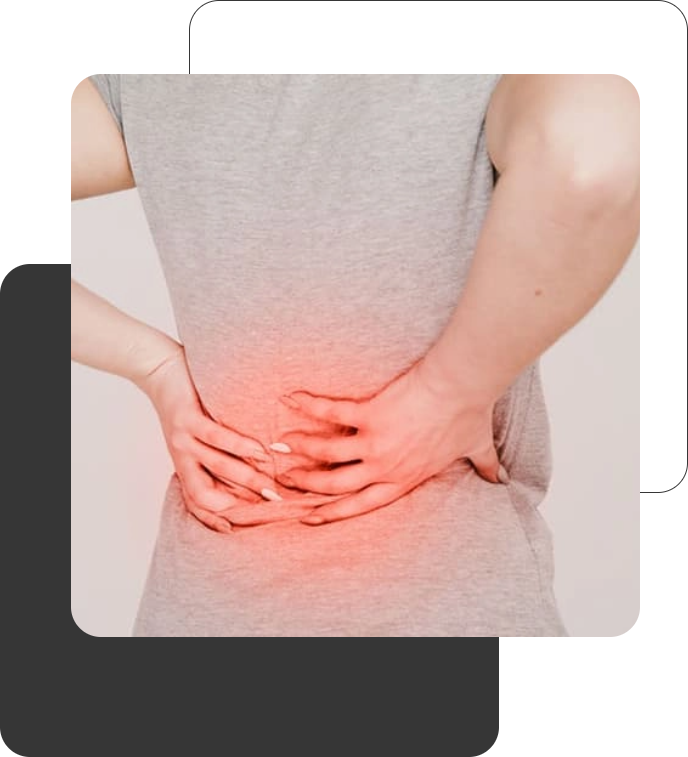
Causes of back pain
Treatment
Medications
- Pain relievers. Nonsteroidal anti-inflammatory drugs (NSAIDs), such as ibuprofen (Advil, Motrin IB, others) or naproxen sodium (Aleve), might help. Take these medications only as directed. Overuse can cause serious side effects.
- Muscle relaxants. If mild to moderate back pain doesn't improve with pain relievers, a muscle relaxant might help. Muscle relaxants can cause dizziness and sleepiness.
- Topical pain relievers. These products, including creams, salves, ointments and patches, deliver pain-relieving substances through the skin.
- Narcotics Drugs containing opioids, such as oxycodone or hydrocodone, may be used for a short time with close medical supervision.
- Antidepressants. Some types of antidepressants — particularly duloxetine (Cymbalta) and tricyclic antidepressants, such as amitriptyline — have been shown to relieve chronic back pain.
Physical therapy
Cortisone injections
Radiofrequency ablation
Implanted nerve stimulators
Surgery
Risk Factors
- Age. Back pain is more common with age, starting around age 30 or 40.
- Lack of exercise. Weak, unused muscles in the back and abdomen might lead to back pain.
- Excess weight. Excess body weight puts extra stress on the back.
- Diseases.
- Improper lifting.
- Psychological conditions.
- Smoking.
Prevention

Do muscle-strengthening and stretching exercises at least 2 days a week.
Stand and sit up straight.
Avoid heavy lifting. If you do lift something heavy, bend your knees and keep your back straight…
Get active and eat healthy. Being overweight can strain your back.
What procedure is done for back pain?
FAQ's
What to expect in back physical therapy?

How long is physical therapy for back pain?
What happens after physical therapy is done?
Does physical therapy have side effects?